
Empirical knowledge states that as much as 70-85% of aerodynamic drag of the rider + bike system comes from the body of the rider. For this reason, we can conclude that the single most important variable when trying to reduce drag (and go faster) is the body position.
What is almost equally as important though is what we cover said body in. Humans are far from streamlined by nature. The best thing we can do to lower drag is to manipulate airflow using optimised fit, seams and fabrics.
This is where aerodynamic cycling kit comes in. We all know it should work, but what is the difference exactly?
Over the past year, we have done a variety of clothing/equipment tests to show the gains (or losses) provided by various options.
Let´s start with the basics first:
In this test, we have ran through all of the main categories of clothing that you would normally see in a (road) cycling scenario.
Each test was ridden with the same aero road helmet (Abus Gamechanger 2.0, size M) and shoe setup (S-Works Torch RD, Rule28 Aero-ish socks, Speedplay Walkable Aero Cleats), except the full TT kit.
The TT kit was tested as normally, with Rule28 Neo UCI overshoes, S-Works Torch RD Lace-ups and our low-stack kit for Speedplay.
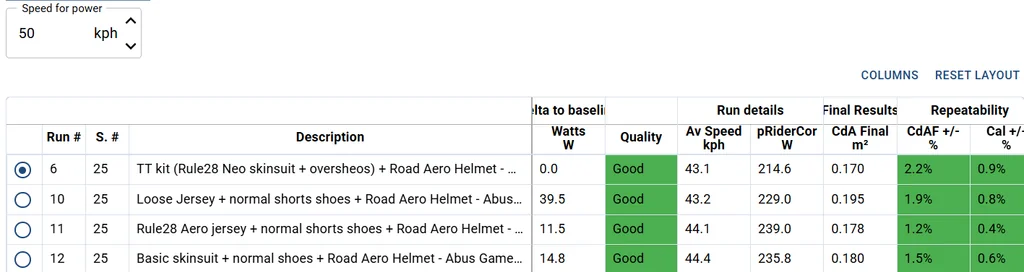
Loose fitting kit, perhaps unsurprisingly, comes with a massive drag penalty (39.5W@50km/h) and should be avoided at all costs.
The TT (Rule28 Neo TT suit) kit is a clear winner as expected, with a sizeable 11.5W@50km/h advantage over the second fastest option.
What did surprise me was the relatively close call between the basic skinsuit (Rule28 gravel skinsuit) and aero jersey (3.3W in favour of the Rule28 aero jersey), particularly given the similar fit and construction of the two.
The most likely explanation for said difference is the hydration bladder pocket present on the gravel skinsuit.
What we can take away from this comparison is that it does not really matter if your kit is 2-piece or 1-piece, as long as the fit and materials are right.
Similarly to the previous test, here we have compared commonly used helmet types:
Helmets make up a similarly large component of aerodynamic performance compared to clothing, so I did expect some big differences here.
All of the runs below have been performed in full TT kit, with the helmet as the only variable.
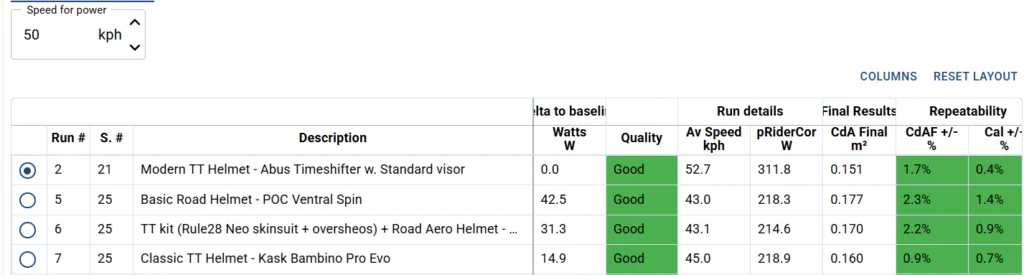
Going from slowest to fastest, we unsurprisingly start with the standard road helmet. An open design with a lot of ventilation simply does not lend itself to low drag, despite the small overall size.
The aero road helmet saved a significant amount of drag – 11.2W @50km/h – which is definitely a margin you don`t want to leave on the table if you are a competitive athlete.
Next up is the “classic” TT helmet, in this case the Bambino Pro Evo. While the design is almost a decade old, it is still extremely competitive and still used at the highest level of the sport. It saves a huge 27.6W @50km/h in this case. Your results may of course vary, as helmet choice is highly individual.
The ABUS Timeshifter represents the latest and greatest out of the new crop of super wide, deflector style TT helmets. The German brand has struck absolute gold with this design, as it performs exceptionally well over a variety of rider types, including myself.
Compared to our baseline helmet, the Timeshifter saves a whopping 42.5W @50km/h and 14.9W @50km/h over the already rapid Kask TT helmet.
With the basics out of the way, let`s have a look at the finer details in terms of equipment testing.
The following dataset is the conclusion of broader equipment testing performed for our long-time client and TT enthusiast Jakub. It contains a variety of overshoes from Rule28 and other brands:
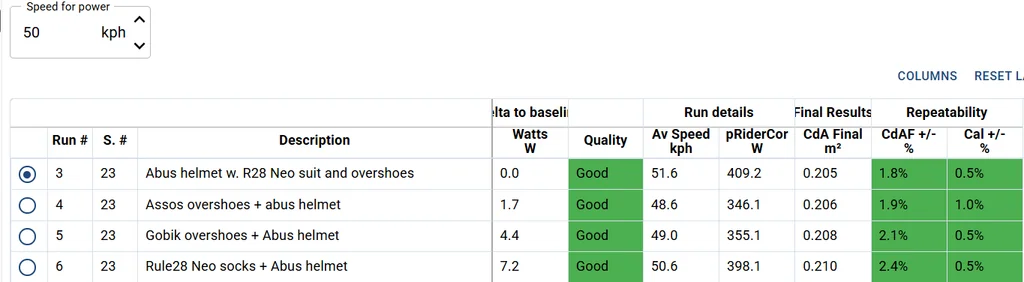
The Rule 28 Neo TT overshoes take a clear win over the competition, and also over the Neo socks.
While the first part of that results was kind of expected, I was surprised to see the Neo socks perform poorly for Jakub. In other test with lace-up shoes, including mine (read here), they performed on par or better than the overshoes. It appears that his DMT shoes are just not as slippery as the ones from S-Works or Nimble.
Thanks to the prevalence of these two brands in the TT/Triathlon space, it is a question that comes up with regularity, and now it seems like the answer is getting pretty clear.
Looking through our latest test results, I came across the following dataset, which sums up the trend we are seeing really well:
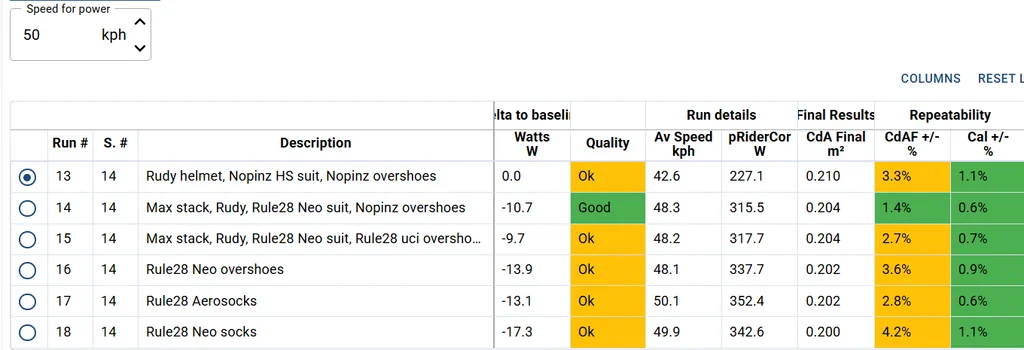
In all of our 2025 and 2026 tests, Rule28 overshoes and skinsuits consistently outperformed NoPinz across our tested riders.
The only exception I have found is the test of our Canadian client Benoit. His custom fitted NoPinz Hypersonic was able to match our standard Rule28 Neo TT suit 1:1 in terms of drag.
Needless to say, I am happy that I made the switch back in 2023.
With the main competitor out of the way, let`s have a look at some other high-performing skinsuits.
Sample skinsuits and ridiculous numbers come as courtesy from a pro time-triallist friend:
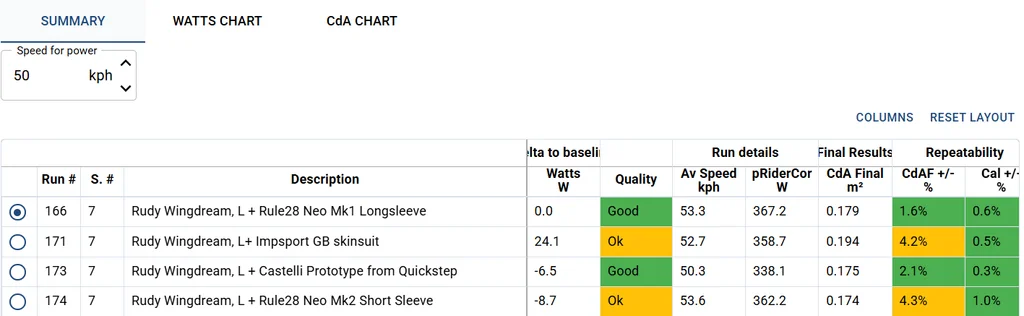
As you can see, our Neo TT test suit has managed to outperform all alternatives, including an exotic prototype suit from Castelli.
Another interesting datapoint is our comparison with the non-UCI legal Endura D2Z Encapsulator suit:
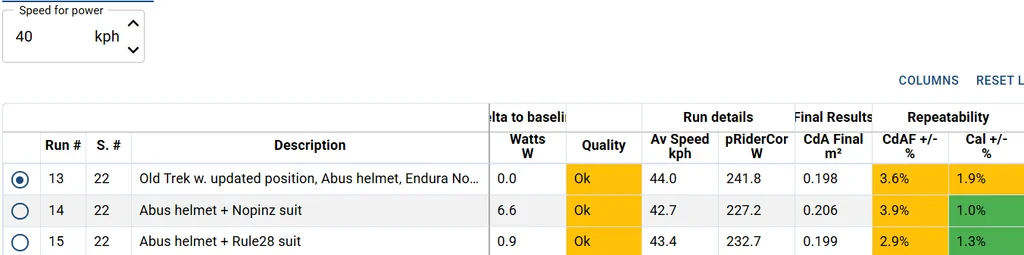
Despite the now banned design with external structures, the Neo suit managed to match the Endura almost one to one. An impressive achievement by any means!
You can also note another example of the NoPinz Hypersonic bested by the Rule28 Neo.
While the Rule28 Neo range has proven to be a top all-around option for most riders, there are some exceptions we have found:
Due to the aggressive design of them ribs, the suit only really comes to its own at speeds of 44-45km/h and above.
With beginner riders, AG triathletes and those riding below this threshold in general, we found that regular skinsuits with smooth sleeves or less prominent textures performed better. In case you belong to this group, you might want to consider the One skinsuit and overshoes instead.
During my preparation for this year´s gravel nationals, I also invested some time into testing my off-road setup.
Needless to say, the session did bring out some unexpected results that differ quite a lot from our regular testing.
We definitely did not expect MTB shoes + pedals to be faster than a road setup!
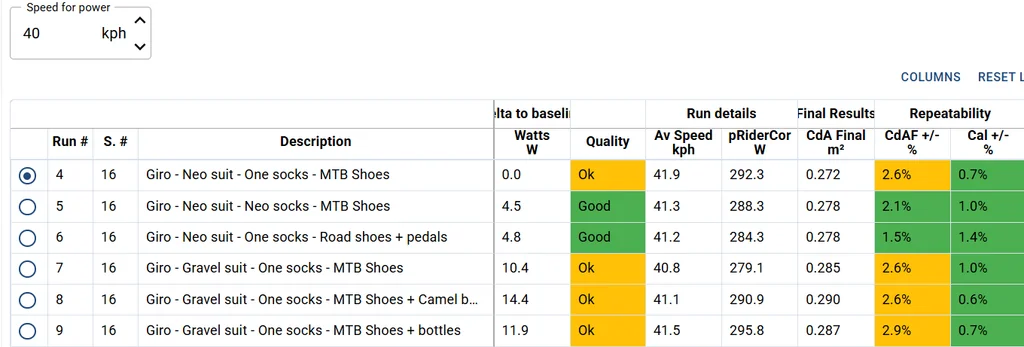
You can watch my YouTube video for a full test overview and commentary on the results.
6 Responses
Is the nopinz suit being tested here the hypersonic mk2 or the older hypersonic?
It is the Mk1. Mk2s only started being shipped around August this year and thus logically were not available at the time of the test in question.
Is it not kind of misleading to say that nopinz is slower when youre comparing 2 diffrent generations? Wouldnt a fairer comparision be the hs mk1 and rule28 one?
I don´t think that two products available at the same time are “different generations”.
Also, I am not a fortune teller to be able to foresee the release of HS Mk2 3-6 months in advance.
Is the GB Imsport suit the 2024 Olympic design? With wavy arm detail?
No, it was the precious version.